

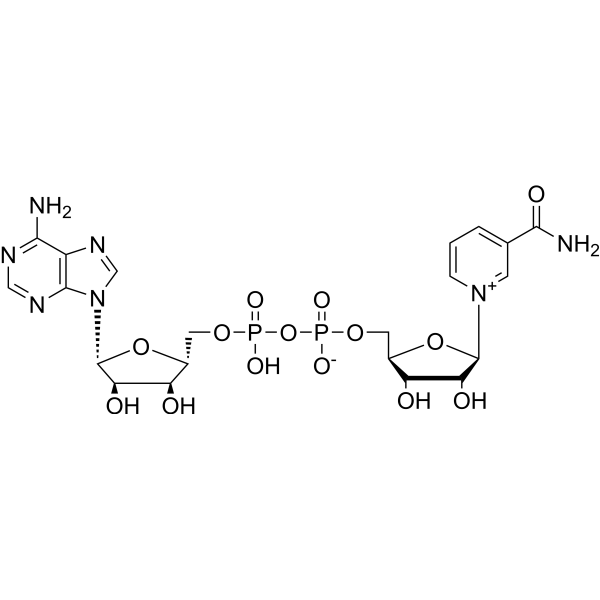
Description Contents hide 1 Product Description 2 Product Specifications 3 Mechanism of Action 4 Precautions 5 Disclaimer 6 Shipping Guarantee 7 Trade Assurance Product DescriptionNAD is one of the most fundamental cofactors in cellular metabolism and bioenergetics. It functions primarily as a coenzyme for dehydrogenases, facilitating reversible redox reactions by alternating between its oxidized form (NAD⁺) and reduced form (NADH). Within cells, NAD acts as an essential electron carrier, transferring reducing equivalents between metabolic pathways. This makes it indispensable in processes like glycolysis, fatty acid oxidation, the tricarboxylic acid (TCA) cycle, and mitochondrial oxidative phosphorylation.In addition to its classical metabolic role, NAD serves as a substrate for several key regulatory enzymes, including sirtuins, poly(ADP-ribose) polymerases (PARPs), and cyclic ADP-ribose synthases (CD38 and CD157). These enzymes link NAD metabolism to transcriptional regulation, DNA repair, calcium signaling, and stress responses. For example, sirtuins are NAD⁺-dependent histone deacetylases that control chromatin remodeling and mitochondrial biogenesis, directly influencing cellular longevity and energy homeostasis.The intracellular NAD /NADH ratio serves as a vital indicator of the cellular redox state. Alterations in this ratio influence metabolic flux, oxidative balance, and cellular fate decisions. NAD depletion has been correlated with metabolic decline, neurodegeneration, and age-related dysfunctions, while NAD replenishment through precursors such as NMN or NR has shown to restore mitochondrial efficiency and improve stress resistance in research models.Because of its multifaceted biochemical roles, NAD is widely utilized in laboratory studies of energy metabolism, aging biology, mitochondrial physiology, DNA repair mechanisms, and oxidative stress responses. It also provides a critical biochemical link between nutrient sensing and epigenetic regulation. Modern NAD research extends beyond metabolism, encompassing immunometabolism, inflammation, circadian rhythm regulation, and cell survival signaling.Laboratory-grade NAD supplied in purified lyophilized form ensures stability and compatibility for enzymatic assays, redox biochemistry, and cellular metabolism studies. It is commonly employed in in vitro systems to study enzyme kinetics, metabolic flux, or as a standard cofactor in redox-based assays. High-purity NAD is also essential in analytical and diagnostic applications requiring reproducible metabolic quantification or NAD/NADH ratio measurements.Product SpecificationsPropertyDescriptionProduct NameNAD CAS Number53-84-9SynonymsNicotinamide adenine dinucleotide; β-NAD; Diphosphopyridine nucleotideMolecular FormulaC21H27N7O14P2Purity≥99%FormLyophilized powderStorage−20°C, protected from light and moistureSolubilitySoluble in water and aqueous buffersStabilityStable for ≥12 months under recommended conditionsCategoryRedox coenzyme; Metabolic cofactorApplicationsEnergy metabolism studies, redox biochemistry, mitochondrial research, enzyme assaysResearch AreaBiochemistry, Molecular Biology, Metabolism, Aging, NeurobiologyIntended UseFor laboratory research use onlyMechanism of ActionNAD functions as a critical redox mediator by alternately accepting and donating electrons during metabolic reactions. In catabolic pathways such as glycolysis and the TCA cycle, NAD⁺ accepts electrons from substrates to form NADH. This reduced form then donates electrons to the mitochondrial electron transport chain, driving ATP synthesis through oxidative phosphorylation. Consequently, NAD⁺ is indispensable for cellular energy production and the maintenance of metabolic balance.Beyond its redox activity, NAD operates as a signaling molecule and substrate for enzymatic reactions that regulate genomic integrity, stress resistance, and longevity. Sirtuins utilize NAD⁺ to deacetylate histones and transcriptional regulators, thereby modulating chromatin structure and mitochondrial function. PARPs consume NAD to catalyze poly(ADP-ribosyl)ation, a crucial step in DNA damage sensing and repair. CD38 and CD157 metabolize NAD⁺ into cyclic ADP-ribose, a key messenger for intracellular calcium signaling.These non-redox functions position NAD⁺ as a molecular bridge connecting metabolism to gene regulation and stress responses. Its levels decline with age, contributing to mitochondrial dysfunction and cellular senescence. Restoration of NAD⁺ has been shown in experimental systems to reactivate sirtuin signaling, enhance DNA repair efficiency, and promote cellular resilience. Thus, NAD⁺ not only fuels metabolism but also coordinates adaptive survival pathways in response to metabolic and oxidative stress.PrecautionsIn laboratory and biochemical applications, NAD is considered non-toxic and chemically stable under controlled conditions. However, in cellular models, elevated NAD concentrations can influence multiple signaling pathways, potentially altering sirtuin or PARP activity and thus affecting gene expression patterns. Excessive activation of PARPs, for instance, can lead to NAD depletion, ATP loss, and necrotic-like cell death under oxidative stress conditions.While NAD itself is safe for experimental use, its metabolic modulation should be carefully optimized in vitro to maintain physiological relevance. Researchers handling NAD⁺ should avoid prolonged exposure to light and humidity, as these conditions can lead to degradation. No adverse effects are associated with standard research concentrations, and all observed cellular changes are pathway-dependent and reversible upon normalization of NAD⁺ levels.Importantly, NAD supplied for laboratory use is not intended for human administration and must be handled following standard laboratory safety protocols.DisclaimerAll products are for laboratory research use only. They are not intended for human or veterinary applications, diagnostic use, or therapeutic administration. Researchers should handle all materials using appropriate safety procedures and regulatory compliance.Shipping GuaranteeAll shipments are handled using validated cold-chain logistics to preserve peptide integrity. Each package is sealed in moisture-proof containers with secondary protective wrapping and continuous temperature monitoring. Products are shipped via express international couriers with full tracking and insurance coverage.Trade AssuranceWe ensure product authenticity, verified ≥99% purity, and compliance with analytical standards (HPLC, MS, and NMR). Each batch is supplied with a Certificate of Analysis (CoA). Our trade assurance policy guarantees replacement or refund for any deviation from listed specifications. your name your email theme Your message (optional) submitΔ
Related products

2 Piece Kurta Sets
$ 14.89
3 Piece Kurta Set
$ 34.39
2 Piece Kurta Sets
$ 75.88

2 Piece Kurta Sets
$ 32.78

2 Piece Kurta Sets
$ 12.99

2 Piece Kurta Sets
$ 16.34
2 Piece Kurta Sets
$ 21.19

2 Piece Kurta Sets
$ 15.88